
Kenya’s Chief Justice Faces Criticism: Misogyny or Merit?

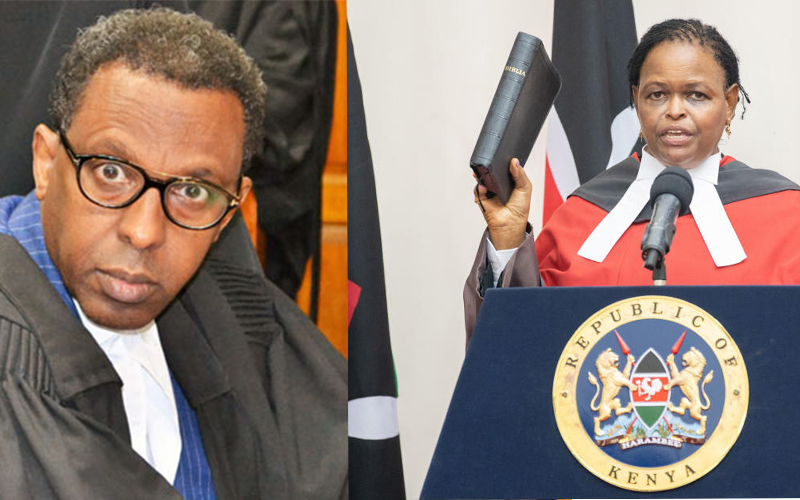
Nairobi, November 14, 2024 — Chief Justice Martha Koome’s assertion that the criticism she faces is rooted in misogyny has sparked a heated debate in Kenya, drawing reactions from various quarters, including senior counsel Ahmednasir Abdullahi. This controversy highlights the thin line between valid criticism and gender-based prejudice.
Chief Justice Koome recently commented that the harsh criticism directed at her stems from gender bias. She argued that the negative feedback is purely misogynistic, attributing it to her being a woman in a high-ranking position. “The criticism I receive is because of my gender,” Koome stated, defending her performance and qualifications.
However, her remarks were met with strong opposition from prominent figures, including senior counsel Ahmednasir Abdullahi. In a scathing tweet, Ahmednasir dismissed Koome’s claims as “rubbish,” asserting that the criticism she faces is due to her perceived incompetence and lack of qualifications. “We are critical of you, not because of your gender. We are critical of you because you are incompetent. We are critical of you because you were unqualified for the job and handpicked by the Uhuru regime to do its bidding,” he wrote.
Ahmednasir’s tweet further alleged that Koome graduated last in her class and lacks the vision for judicial reforms. He accused her of allowing external influences to compromise the integrity of the judiciary. “Your incompetence, which is legendary, has nothing to do with your gender,” he concluded.
The public reaction to this exchange has been polarized. Some Kenyans support Koome’s stance, viewing the criticism as an extension of the systemic misogyny that women in leadership positions often face. Others side with Ahmednasir, insisting that their concerns are solely about her professional abilities and performance.
The distinction between misogyny and legitimate criticism is complex. Women in high-profile roles frequently encounter gender-based attacks, which can obscure genuine issues regarding their competence. This scenario is not unique to Kenya but is a global phenomenon where women leaders often have to navigate both valid criticism and prejudiced views.
Critics of Koome argue that her leadership has been marred by inefficiency and lack of progress in judicial reforms, attributing their discontent to her performance rather than her gender. Conversely, supporters contend that women are disproportionately scrutinized and that gender bias often colors the feedback they receive.
This debate underscores the challenges faced by women in leadership and the importance of distinguishing between valid professional criticism and gender-based discrimination. It also highlights the necessity for a balanced discourse that evaluates leaders based on their merits while remaining vigilant against prejudiced attacks.
As the conversation continues, it remains crucial for both sides to engage constructively, ensuring that criticisms are fair and based on performance, and not influenced by gender biases. This approach is essential for fostering an inclusive and equitable environment where leaders are held accountable for their actions, irrespective of their gender.


